
How do you know which leak detector will actually catch those tiny, stubborn refrigerant escapes before your shift ends? Relying on guesswork costs you time and client trust.
Choosing the right tool changes everything. I put together this list of the Best Refrigerant Leak Detectors to help you isolate the equipment that matches your specific technical needs. Keep reading to see which models hold up under pressure.
Key Takeaways
- Prioritize infrared sensors if you work on high-end systems because they do not trigger false alarms from oil or moisture.
- Check the response time of the unit to ensure it alerts you quickly when moving across potential leak points.
- Heated diode sensors act like a bloodhound, offering extreme sensitivity levels that are ideal for finding very slow, hard-to-trace leaks.
- Ensure the device comes with a backlit display so you can read your readings easily when working in dim attics or basements.
- Verify that the unit supports the refrigerant gases you handle daily, such as R134a or the newer R1234yf, to avoid tool incompatibility.
| Industry Gold Standard |  |
Bacharach H-10 Pro Leak Detector | Extremely high sensitivity | Durable industrial design | Long-standing professional reputation | View on Amazon | Read Review |
| Long Life Reliability | 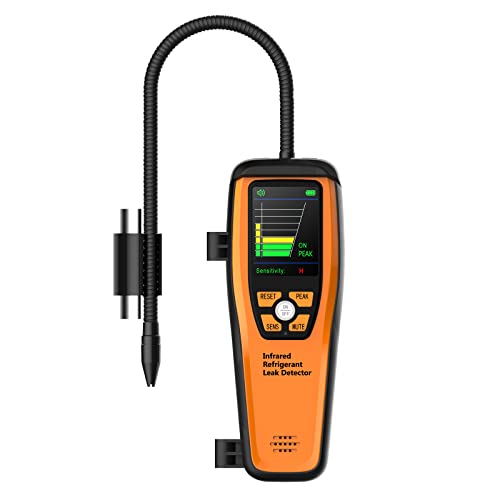 |
Elitech ILD-200 Infrared Leak Detector | Ten year sensor life | Ignores false triggers | Intuitive interface | View on Amazon | Read Review |
| High Visibility Precision |  |
Fieldpiece DR82 Infrared Leak Detector | Bright backlit display | Rapid sensor response | Filters out contaminants | View on Amazon | Read Review |
| Rapid Response Expert |  |
Fieldpiece DR58 Heated Diode Detector | Very fast response | Clear visual display | Excellent gas sensitivity | View on Amazon | Read Review |
| Simple Reliable Performance | 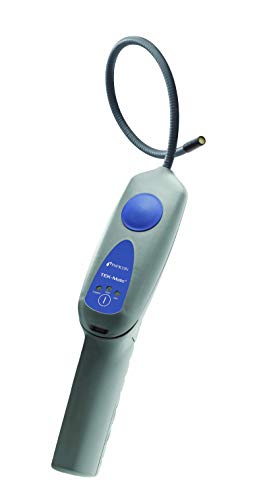 |
Inficon 705-202-G1 Leak Detector | Simple, direct operation | Compact and portable | Dependable sensor technology | View on Amazon | Read Review |
| Budget Friendly Essential |  |
Elitech CLD-100 Halogen Leak Detector | Very portable | Simple to operate | Affordable for beginners | View on Amazon | Read Review |
| Versatile Sensor Power |  |
Elitech ILD-100H Heated Diode Detector | Wide gas compatibility | Durable heated sensor | Clear visual feedback | View on Amazon | Read Review |
| Three Level Precision |  |
TOPTES RT-108 Halogen Leak Detector | Three sensitivity settings | Highly visible design | Simple to use | View on Amazon | Read Review |
| Reliable Entry Level |  |
Elitech WJL-6000S Freon Leak Detector | Affordable and accessible | Fast audible response | Easy to maneuver | View on Amazon | Read Review |
| Advanced Diagnostic Tool |  |
Inficon D-TEK Stratus Leak Detector | Monitors gas concentration | Performs in high airflow | Highly accurate sensor | View on Amazon | Read Review |
More Details on Our Top Picks
-
Bacharach H-10 Pro Leak Detector
If you ask veteran technicians which tool they trust most for finding elusive leaks, many will point you toward this model. It utilizes a proven heated sensor technology that remains incredibly effective at identifying even the smallest trace amounts of refrigerant in the air.
This device is best for those who prioritize maximum sensitivity over flashy digital interfaces. While the analog controls might feel a bit old-school compared to modern gadgets, the sheer reliability of the detection makes it a staple for serious professionals.
- Brand Name:Bacharach
- Sensor Type:Heated Diode
- Gas Compatibility:CFCs, HCFCs, HFCs
- Power Source:AC or Battery
- Additional Feature:Audible and visual leak indicators
- Additional Feature:Adjustable sensitivity settings
- Additional Feature:Internal pump for rapid response
-
Elitech ILD-200 Infrared Leak Detector
For those tired of constantly replacing sensors, this infrared model offers a significant advantage with its decade-long sensor life. It ignores false alarms caused by humidity or temperature changes, which acts like a filter to ensure you only track actual refrigerant leaks.
The interface is intuitive, making it a solid choice for technicians who want a user-friendly experience without sacrificing accuracy. You will find it handles various common refrigerants quite well, though it is slightly heavier than some compact pocket models.
- Brand Name:Elitech
- Sensor Type:Infrared
- Gas Compatibility:CFCs, HCFCs, HFCs
- Display Type:LCD screen
- Power Source:Rechargeable lithium battery
- Additional Feature:Audible and visual alarms
- Additional Feature:Adjustable sensitivity levels
- Additional Feature:Peak function for finding leaks
-
Fieldpiece DR82 Infrared Leak Detector
Fieldpiece designed this unit with a large, backlit display that makes it exceptionally easy to read in dark crawlspaces or attics. Its infrared sensor is specifically tuned to ignore oil and moisture, allowing you to focus entirely on the refrigerant gas itself.
This detector is ideal for busy contractors who need a durable, lightweight tool that performs consistently throughout a long day. While the infrared technology is top-tier, just keep in mind that it requires a brief warm-up period before it hits peak performance.
- Brand Name:Fieldpiece
- Sensor Type:Infrared
- Gas Compatibility:CFCs, HCFCs, HFCs
- Weight:Lightweight design
- Display Type:Backlit LCD
- Power Source:Rechargeable battery
- Additional Feature:Audible and visual alerts
- Additional Feature:Trigger and peak modes
- Additional Feature:Rugged housing for job sites
-
Fieldpiece DR58 Heated Diode Detector
When you need to find a leak quickly in a high-pressure environment, the heated diode sensor in this model provides a very fast response time. It is built for speed and efficiency, helping you clear more service calls without lingering too long on a single system.
The screen is clear and provides real-time feedback that helps you track down the source of the leak by following the concentration levels. Because it uses a heated diode, it is sensitive to a broad range of gases, though it may consume battery power a bit faster than infrared counterparts.
- Brand Name:Fieldpiece
- Sensor Type:Heated Diode
- Gas Compatibility:CFCs, HCFCs, HFCs
- Display Type:Backlit LCD
- Power Source:Rechargeable battery
- Additional Feature:Rugged, weather-resistant body
- Additional Feature:Multiple sensitivity settings
- Additional Feature:Replaceable sensor tips
-
Inficon 705-202-G1 Leak Detector
This model focuses on doing one thing very well, which is providing dependable leak detection for standard refrigeration systems. It is straightforward and lacks unnecessary bells and whistles, making it a great option for technicians who appreciate simplicity in their equipment.
The design is compact enough to fit into tight service panels without much fuss. You might miss having a high-end digital screen, but the consistent audio alerts are more than enough to guide you to the source of a leak.
- Brand Name:Inficon
- Sensor Type:Heated Diode
- Gas Compatibility:CFCs, HCFCs, HFCs
- Power Source:Battery
- Additional Feature:Audible signal intensity
- Additional Feature:Adjustable sensitivity
- Additional Feature:Compact design for tight spaces
-
Elitech CLD-100 Halogen Leak Detector
If you are looking for an entry-level tool that covers the basics, this halogen detector is a cost-effective solution for standard maintenance tasks. It gets the job done for residential HVAC work where extreme sensitivity might not be the primary requirement.
The unit is quite portable, allowing you to carry it easily from one job to the next. Just remember that it relies on halogen ionization technology, so it works best when you are working in relatively stable, indoor environments.
- Brand Name:Elitech
- Sensor Type:Halogen Ionization
- Gas Compatibility:CFCs, HCFCs, HFCs
- Power Source:Batteries
- Additional Feature:Audible alarm signals
- Additional Feature:Adjustable sensitivity
- Additional Feature:Flexible probe for tight areas
-
Elitech ILD-100H Heated Diode Detector
This detector balances the sensitivity of a heated diode with a more modern, durable design that stands up to the rigors of daily use. It is compatible with a wide range of common refrigerants, including newer variants, making it a versatile choice for any toolkit.
The unit features a clear visual indicator that makes it easy to track changes in gas concentration. It is a well-rounded tool that offers a great middle ground between high-end professional gear and basic consumer models.
- Brand Name:Elitech
- Sensor Type:Heated Diode
- Gas Compatibility:CFCs, HCFCs, HFCs
- Power Source:Rechargeable battery
- Additional Feature:Adjustable sensitivity levels
- Additional Feature:Audible and visual alerts
- Additional Feature:Ergonomic hand grip
-
TOPTES RT-108 Halogen Leak Detector
Equipped with three distinct sensitivity levels, this detector allows you to adjust your precision based on the environment you are working in. It is helpful for narrowing down a leak once you get into the general vicinity.
The orange casing is highly visible, which is a nice touch if you tend to misplace your tools in a crowded truck. It performs well for routine HVAC inspections, providing a straightforward way to verify system integrity before you finish a job.
- Brand Name:TOPTES
- Sensor Type:Halogen Ionization
- Gas Compatibility:CFCs, HCFCs, HFCs
- Power Source:Battery
- Additional Feature:Audible and visual alarms
- Additional Feature:Portable, lightweight build
- Additional Feature:Flexible probe tip
-
Elitech WJL-6000S Freon Leak Detector
This is one of the most recognizable tools for technicians just starting out because it offers reliable detection at a price that is hard to ignore. It responds quickly to leaks and provides a clear audible alarm that increases in frequency as you get closer to the source.
While it lacks some of the advanced filtering found in more expensive infrared models, it remains a dependable workhorse for basic troubleshooting. It is a smart choice for anyone who needs a backup unit or a first tool for light residential service.
- Brand Name:Elitech
- Sensor Type:Halogen Ionization
- Gas Compatibility:CFCs, HCFCs, HFCs
- Power Source:Batteries
- Additional Feature:Adjustable sensitivity
- Additional Feature:Flexible extension probe
- Additional Feature:Audible alarm signals
-
Inficon D-TEK Stratus Leak Detector
If you need more than just a leak alert, this device acts as a portable monitoring system that tells you exactly how much refrigerant is in the air. It is like having a laboratory-grade sensor in the palm of your hand, allowing you to track down leaks in high-airflow areas where others might struggle.
The cloud-based connectivity and ability to log data make this a superior choice for complex diagnostics. It is a significant investment, but the level of information it provides can save you hours of guesswork on difficult, persistent leaks.
- Brand Name:Inficon
- Sensor Type:Infrared
- Gas Compatibility:CFCs, HCFCs, HFCs
- Display Type:LCD screen
- Power Source:Rechargeable battery
- Additional Feature:Cloud data logging
- Additional Feature:Numerical concentration display
- Additional Feature:Fast clearing sensor technology
Frequently Asked Questions
How often do I need to replace the sensor?
Most sensors last between 100 and 500 hours of active operation. If you notice the device is slow to respond or keeps failing to clear itself, the sensor is likely nearing the end of its life. Keep a spare sensor on hand if you use the tool daily. It is a simple part to swap, and it keeps your diagnostic accuracy high.
Will these tools detect leaks in a pressurized system?
Yes, but you must move the probe slowly. A common mistake is moving the tip too quickly, which allows the escaping gas to dissipate before the sensor can register it. Hold the probe tip about one quarter inch away from the joint or hose you are inspecting. Move it along the connection at a rate of roughly one inch per second.
Why does my detector go off everywhere?
This is usually due to background contamination or an overly high sensitivity setting. If the air in the room is already saturated with refrigerant, the sensor cannot distinguish the leak from the ambient air. Move to a clean, well-ventilated area to reset the unit. If the problem persists, you may need to lower the sensitivity to help the device focus only on the strongest concentration of gas.
Is there a difference between residential and automotive detectors?
The underlying technology is similar, but the physical design differs. Automotive detectors are built to be compact for reaching into tight engine spaces, often featuring flexible probes. Residential units are often larger and designed to check home HVAC systems where longer hoses and probes are more useful. Always choose a tool that fits the physical requirements of your specific workspace.
Can a detector find a leak in a completely empty system?
No, the system must contain at least a small amount of refrigerant under pressure. If a system has leaked out entirely, there is no gas left for the sensor to identify. In those cases, you should use a UV dye injection method to find the hole. Once you fix the leak and recharge the system, you can then use your detector to verify the seal is tight.