
The difference between a lackluster photo and a sharp, professional image usually comes down to glass quality rather than the camera body itself. Choosing the right optics defines your creative reach and dictates exactly how much light hits your sensor.
The Best Sony Apsc Lenses selection often feels complicated, but the right lens acts like a clear window into your artistic vision. Focusing on your specific shooting needs will keep your gear bag light and your results consistent. Let’s look at the pieces that truly matter.
Key Takeaways
- Prioritize lenses with optical stabilization if your camera body lacks internal image stabilization to ensure handheld shots remain crisp.
- Look for a constant maximum aperture across the entire zoom range to maintain consistent exposure settings while you adjust your focal length.
- Consider the physical size and weight of the optic relative to your camera body to ensure your setup remains comfortable for long shooting sessions.
- Match your primary subject matter, such as landscapes or street photography, to a focal length that minimizes unnecessary cropping in post-production.
- Check that the lens uses a high-speed linear motor if you plan on recording video, as this feature provides quiet and accurate focus tracking.
| Ultimate Vlogging Choice |  |
Sony E 11mm F1.8 Ultra-Wide Prime | Extremely wide perspective | Excellent low light performance | Very lightweight build | View on Amazon | Read Review |
| Compact Travel Companion | Sony E PZ 16-50mm Power Zoom | Retractable design saves space | Smooth power zoom motor | Built-in image stabilization | View on Amazon | Read Review | |
| Budget Reach Specialist |  |
Sony E 55-210mm Telephoto Zoom | Great telephoto zoom range | Integrated image stabilization | Surprisingly lightweight frame | View on Amazon | Read Review |
| Professional Standard Workhorse | 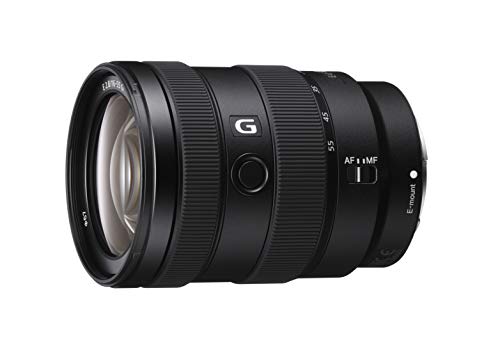 |
Sony E 16-55mm F2.8 G Lens | Sharp G-series optics | Constant F2.8 aperture | Fast and quiet focus | View on Amazon | Read Review |
| Portrait Master Essential |  |
Sony FE 50mm F1.8 Prime | Beautiful background blur | Excellent for low light | Lightweight and simple design | View on Amazon | Read Review |
| Versatile All-In-One |  |
Tamron 17-70mm F2.8 Zoom | Broad zoom range | Constant F2.8 aperture | Effective vibration compensation | View on Amazon | Read Review |
| Reliable Starter Choice | 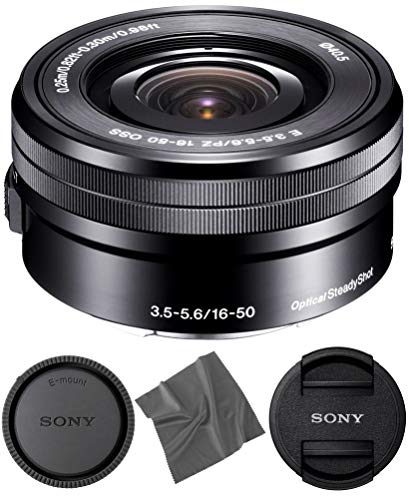 |
Sony E 16-50mm OSS Lens | Extremely compact size | Integrated image stabilization | Versatile everyday range | View on Amazon | Read Review |
| Refined Standard Zoom |  |
Sony E 16-50mm OSS II | Updated focus motor | Compact and lightweight | Built-in stabilization | View on Amazon | Read Review |
| Affordable Street Performer | 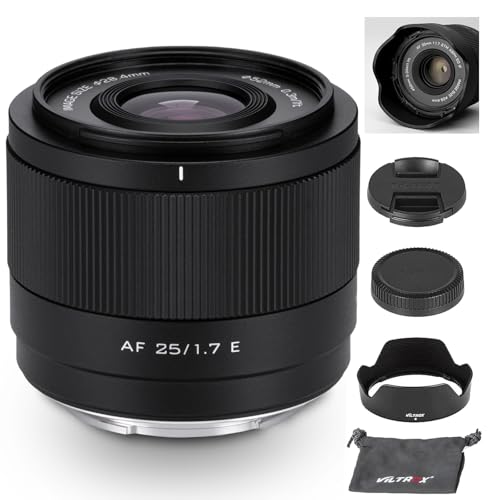 |
Viltrox 25mm F1.7 Prime | Large aperture for bokeh | Quick autofocus motor | Natural focal length | View on Amazon | Read Review |
| Ultimate Travel Superzoom | 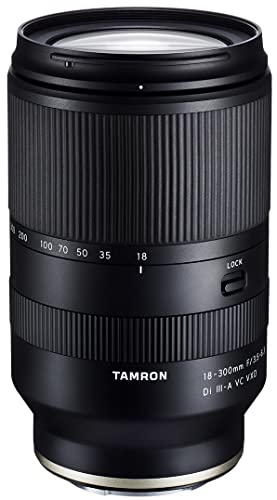 |
Tamron 18-300mm Telephoto Zoom | Huge focal range | Excellent magnification ratio | Built-in vibration compensation | View on Amazon | Read Review |
More Details on Our Top Picks
-
Sony E 11mm F1.8 Ultra-Wide Prime
If you spend most of your time in front of a camera or capturing sweeping landscapes, this lens is your best friend. It offers an ultra-wide field of view that makes tight spaces feel open and grand.
The fast F1.8 aperture is a massive benefit for those who shoot in dimly lit environments. You might find the lack of optical stabilization a slight hurdle, but the lens is so lightweight that it remains easy to handle for long periods.
- Brand Name:Sony
- Lens Type:Prime
- Focal Length:11mm
- Aperture Range:F1.8
- Weight:181g
- Focus System:Autofocus
- Additional Feature:Dust and moisture resistant
- Additional Feature:Linear response manual focus
- Additional Feature:Compact design for gimbals
-
Sony E PZ 16-50mm Power Zoom
This lens is the definition of portability. Its power zoom mechanism allows for smooth transitions, which is a major advantage when you are recording video clips on the fly.
Because it collapses when not in use, you can slide your camera into a small bag without feeling weighed down. It is not the sharpest glass on the market, but its versatile focal range covers everything from wide shots to tight portraits.
- Brand Name:Sony
- Lens Type:Standard Zoom
- Focal Length:16-50mm
- Aperture Range:F3.5-5.6
- Focus System:Autofocus
- Additional Feature:Optical SteadyShot stabilization
- Additional Feature:Electronic zoom control
- Additional Feature:Lightweight aluminum barrel
-
Sony E 55-210mm Telephoto Zoom
Are you looking to capture subjects that are far away, like wildlife or sports? This lens provides the telephoto reach you need without breaking the bank or taking up your entire equipment bag.
It features optical stabilization, which helps keep your images steady when you are zoomed all the way in to 210mm. Just keep in mind that the aperture is a bit narrow, so it performs best when you have plenty of natural daylight.
- Brand Name:Sony
- Lens Type:Telephoto Zoom
- Focal Length:55-210mm
- Aperture Range:F4.5-6.3
- Weight:345g
- Focus System:Autofocus
- Additional Feature:Internal focus mechanism
- Additional Feature:Quiet autofocus operation
- Additional Feature:Compact lens profile
-
Sony E 16-55mm F2.8 G Lens
For those who demand top-tier image quality, this G-series lens is a serious step up. It maintains a constant F2.8 aperture across the entire zoom range, providing consistent light intake no matter how you frame your shot.
It uses an XD linear motor to deliver focus that is both rapid and silent. While it is larger than your average kit lens, the performance gain in sharpness and contrast makes it worth the extra room in your pack.
- Brand Name:Sony
- Lens Type:Standard Zoom
- Focal Length:16-55mm
- Aperture Range:F2.8
- Focus System:Autofocus
- Additional Feature:Fluorine front element coating
- Additional Feature:Customizable focus hold button
- Additional Feature:Dust and moisture resistance
-
Sony FE 50mm F1.8 Prime
This is the lens you turn to when you want that beautiful blurred background effect, known as bokeh. Its 50mm focal length is a classic choice for portraits, as it mimics the natural perspective of the human eye.
It serves as a fantastic introduction to prime lenses because it is simple and effective. You might notice the focus speed is a bit slower than high-end models, but the image clarity at this price point is difficult to ignore.
- Brand Name:Sony
- Lens Type:Prime
- Focal Length:50mm
- Aperture Range:F1.8
- Focus System:Autofocus
- Additional Feature:Circular aperture diaphragm
- Additional Feature:Metal mount construction
- Additional Feature:Compact form factor
-
Tamron 17-70mm F2.8 Zoom
If you want to carry just one lens for an entire day of shooting, this is the one. Its extended zoom range covers almost every common situation, from wide interior shots to tight headshots.
Having a constant F2.8 aperture throughout the zoom is a rare luxury in a lens this flexible. It includes vibration compensation, which is a life-saver if you happen to be shooting handheld in challenging lighting conditions.
- Brand Name:Tamron
- Lens Type:Standard Zoom
- Focal Length:17-70mm
- Aperture Range:F2.8
- Focus System:Autofocus
- Additional Feature:Moisture resistant construction
- Additional Feature:Fluorine coating on element
- Additional Feature:Quiet stepping motor
-
Sony E 16-50mm OSS Lens
This lens is the quintessential starter optic for any new photographer. It is incredibly slim when retracted, almost like a pancake lens, which makes your camera setup feel significantly less bulky.
It provides a useful focal range for everyday snapshots and travel photos. While it lacks the extreme sharpness of professional glass, it is a dependable tool for learning the basics of composition and zoom control.
- Brand Name:Sony
- Lens Type:Standard Zoom
- Focal Length:16-50mm
- Aperture Range:F3.5-5.6
- Focus System:Autofocus
- Additional Feature:Optical SteadyShot stabilization
- Additional Feature:Power zoom functionality
- Additional Feature:Retractable lens design
-
Sony E 16-50mm OSS II
Think of this as the updated version of your favorite basic zoom. It builds upon the legacy of the original by smoothing out operations and improving responsiveness.
The internal stabilization remains a standout feature, ensuring your videos look steady even if your hands are a little shaky. It is a smart pick if you want a lightweight setup that handles both photography and video tasks with ease.
- Brand Name:Sony
- Lens Type:Standard Zoom
- Focal Length:16-50mm
- Aperture Range:F3.5-5.6
- Focus System:Autofocus
- Additional Feature:Improved stabilization performance
- Additional Feature:Power zoom for video
- Additional Feature:Compact retractable build
-
Viltrox 25mm F1.7 Prime
If you are interested in street photography, this lens offers a natural field of view that feels very intuitive. It is wide enough to capture the scene but tight enough to focus on specific subjects.
The large aperture allows for creative depth of field control that kit lenses simply cannot match. While it is not as small as some pancake lenses, the optical quality is impressive for the footprint it leaves on your camera.
- Brand Name:Viltrox
- Lens Type:Prime
- Focal Length:25mm
- Aperture Range:F1.7
- Focus System:Autofocus
- Additional Feature:Smooth focus ring
- Additional Feature:Robust metal build
- Additional Feature:STM stepping motor
-
Tamron 18-300mm Telephoto Zoom
This lens is essentially a Swiss Army knife for your camera. You can capture a wide vista at 18mm and then instantly punch in to 300mm to photograph a distant bird or athlete.
Its magnification ratio is particularly impressive, allowing for some interesting close-up shots that you would usually need a dedicated macro lens to achieve. It is a heavier option, but it eliminates the need to carry extra glass in your bag.
- Brand Name:Tamron
- Lens Type:Superzoom
- Focal Length:18-300mm
- Aperture Range:F3.5-6.3
- Focus System:Autofocus
- Additional Feature:VC image stabilization
- Additional Feature:VXD focus motor
- Additional Feature:Moisture resistant build
Frequently Asked Questions
Should I buy a zoom lens or a prime lens first?
A prime lens has a fixed focal length, which usually results in sharper images and a wider aperture for low-light work. They teach you to move your body to frame the shot. A zoom lens offers the flexibility of multiple focal lengths in one package. It is the better choice if you want to cover many situations without changing glass.
What does the E versus FE designation mean?
The E designation identifies lenses built specifically for APS-C sensors. They are smaller, lighter, and optimized for your camera's smaller sensor area. The FE designation stands for Full-Frame E mount. You can use these on your APS-C camera, but they are often more expensive and physically larger than necessary.
Can I use third party lenses on my Sony camera?
Absolutely, and many third-party makers offer fantastic value. Brands like Sigma and Tamron provide high-quality glass that rivals Sony's own lineup. Just verify that the lens is designed for the Sony E mount. Some third-party options may lack certain features like custom function buttons found on Sony lenses.
How do I know if a lens has autofocus?
Almost all modern Sony E mount lenses include autofocus motors. Look for labels like AF in the product description to confirm. Sony's autofocus system is highly advanced and relies on communication between the lens and the camera body. As long as you choose a modern lens, your camera will track subjects with great speed.
Is a macro lens necessary for close-up photography?
Standard lenses have a minimum focus distance that prevents you from getting very close to small objects. A macro lens is designed to focus at a much shorter range. This allows you to achieve a 1:1 magnification ratio for extreme detail. If you enjoy photographing insects or tiny flowers, a dedicated macro lens is worth the investment.