
Many musicians assume you need a massive, heavy tube head to capture a professional sound. They think digital or pedal-based alternatives always sound like buzzy, thin replicas of the real thing.
The truth is that modern engineering has moved light years ahead of those early, digital nightmares. The Best Amp Simulator Pedals now offer rich, dynamic textures that respond to your picking style just like a cranked amplifier. Let us sort through the noise.
Key Takeaways
- Prioritize units that include an Impulse Response loader if you intend to record directly into a digital audio workstation.
- Check if the pedal provides an XLR output so you can connect directly to a mixing board without needing a separate direct box.
- Look for all-analog circuitry if you prefer a classic, immediate response without the potential latency of digital processing.
- Verify the number of available channels or presets to ensure you can switch between clean and lead tones during a live performance.
- Consider the physical footprint of the pedal to ensure it fits comfortably alongside the rest of your gear on your board.
| Best Analog Foundation | 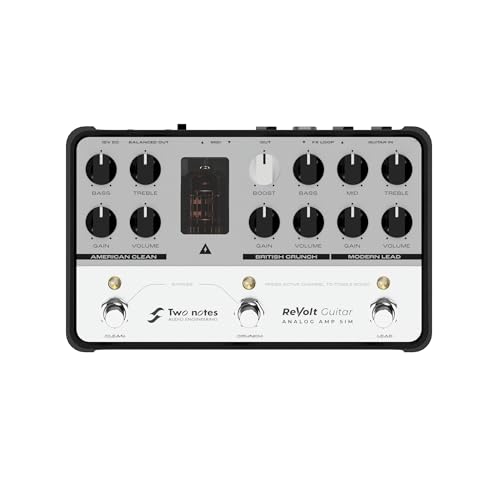 |
Two Notes ReVolt All-analog Simulator | Real vacuum tube warmth | Three distinct channels | Excellent dynamic response | View on Amazon | Read Review |
| Budget Clean Specialist | 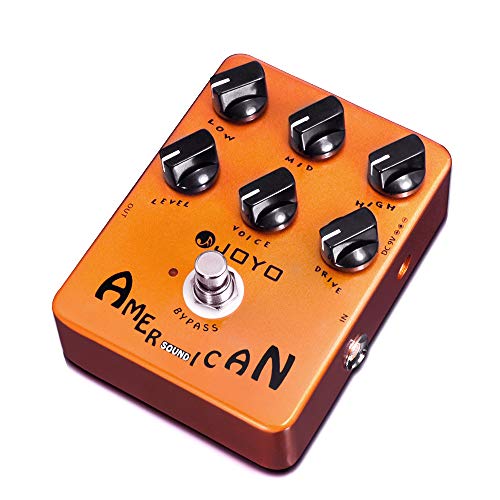 |
JOYO American Tube Amp Simulator | Classic Fender-style tone | Intuitive six-knob layout | Built-in cabinet simulation | View on Amazon | Read Review |
| Simple Edge-of-breakup Tool |  |
GOKKO American-Style Analog Amp Simulator | Responsive drive control | Effective three-band EQ | Authentic analog design | View on Amazon | Read Review |
| Modern Compact Standard |  |
BOSS IR-2 Amp Simulator | Eleven varied amp types | High-quality Celestion IRs | USB-C recording capability | View on Amazon | Read Review |
| Reliable Utility Solution |  |
Generic Analog Amp Speaker Simulator | Simple analog operation | Consistent direct tone | Compact design | View on Amazon | Read Review |
| Entry Level Essential |  |
LEKATO Amp Simulator Pedal | Very easy to operate | True bypass switching | Affordable entry price | View on Amazon | Read Review |
| Multi-Channel Powerhouse |  |
JOYO Preamp House Amp Simulator | Nine distinct amp models | Integrated XLR output | Built-in effects loop | View on Amazon | Read Review |
| All-in-one Practice Station |  |
MOOER GE100 Multi-Effects Simulator | Extensive effect library | Built-in drum rhythms | Integrated expression pedal | View on Amazon | Read Review |
| Boutique Analog Charmer |  |
EarthQuaker Devices Easy Listening Simulator | Organic analog feel | Superior build quality | Unique boutique character | View on Amazon | Read Review |
| Pro Studio Workhorse |  |
BOSS IR-200 Cabinet Simulator | Deep sound shaping | Massive memory storage | High-end audio fidelity | View on Amazon | Read Review |
More Details on Our Top Picks
-
Two Notes ReVolt All-analog Simulator
If you want the authentic response of a tube preamp without the weight of a heavy head, this is your primary destination. It uses a real 12AX7 tube to generate its drive and grit, giving you that warmth that digital circuits sometimes struggle to replicate.
The unit excels at providing three distinct channels that cover anything from pristine cleans to aggressive high-gain leads. Just remember that because it relies on analog circuitry, you will need to pair it with a separate cabinet impulse response loader if you want a fully polished direct signal.
- Brand Name:Two Notes
- Technology Type:All-analog tube
- Channel Count:3
- Additional Feature:Integrated analog cabinet simulation
- Additional Feature:MIDI input and output
- Additional Feature:Rugged metal chassis construction
-
JOYO American Tube Amp Simulator
This pedal functions like a classic Fender amplifier in a box, focusing on those glassy, sparkling clean tones that players crave. It works best as a foundation pedal for people who rely on external drive pedals for their gain.
The six-knob control layout is straightforward enough that you can dial in a great sound in seconds. However, it lacks the complex routing options found in high-end units, so keep it on your board as a reliable tonal base.
- Brand Name:JOYO
- Technology Type:Analog circuitry
- Cabinet Simulation:Integrated
- Channel Count:1
- Additional Feature:True bypass switching
- Additional Feature:Compact pedalboard footprint
- Additional Feature:Simple EQ adjustment
-
GOKKO American-Style Analog Amp Simulator
Think of this as a no-nonsense alternative for guitarists who want to keep their signal path strictly analog. The voice control allows you to shape the character of the amp emulation to match different pickups, which is surprisingly effective for such a small unit.
It handles the transition from clean to dirty quite gracefully. Just keep in mind that the gain range is more tailored toward vintage rock and blues than modern metal saturation.
- Brand Name:GOKKO
- Technology Type:Analog
- Channel Count:1
- Additional Feature:Voice control knob
- Additional Feature:Dedicated drive control
- Additional Feature:Compact metal housing
-
BOSS IR-2 Amp Simulator
This pedal packs a massive amount of versatility into a standard stompbox size. You gain access to 11 high-quality amp types that cover a wide range of musical styles, making it perfect for the player who needs many sounds in a small package.
The inclusion of Celestion Digital cabinet impulse responses ensures that your direct signal sounds professional in any mix. While the interface is clean, you might find yourself wishing for more physical knobs to tweak every single parameter on the fly.
- Brand Name:BOSS
- Technology Type:Digital modeling
- Cabinet Simulation:Included
- Amp Models:11
- Connectivity Ports:USB-C
- Additional Feature:Ambience effect control
- Additional Feature:Stereo output for headphones
- Additional Feature:Simple interface design
-
Generic Analog Amp Speaker Simulator
This is a straightforward analog simulation tool for those who need a consistent direct tone without any digital menu diving. It serves as a solid bridge between your guitar and a mixer, effectively mimicking the smooth roll-off of a traditional speaker cabinet.
It is a quiet, reliable worker that does one thing well. Because it lacks presets or deep editing, it is best suited for players who already have a preferred sound and just need to get it to the front of house.
- Brand Name:Unbranded/Generic
- Technology Type:Analog
- Cabinet Simulation:Included
- Additional Feature:Robust metal enclosure
- Additional Feature:Zero latency performance
- Additional Feature:Standard 9V power operation
-
LEKATO Amp Simulator Pedal
If you are looking for an inexpensive way to start playing without an amplifier, this is an accessible starting point. It offers a decent range of tones from clean to overdrive, which covers most of the basic needs for home practice.
The true bypass design ensures that your signal remains clean when the pedal is off. Just be aware that it lacks the professional-grade cabinet modeling found in more expensive digital units, so it performs best when running into an external speaker simulation.
- Brand Name:LEKATO
- Technology Type:Analog/Digital hybrid
- Channel Count:1
- Additional Feature:Compact pedalboard size
- Additional Feature:Clean to overdrive range
- Additional Feature:Durable metal construction
-
JOYO Preamp House Amp Simulator
This pedal feels like having a full studio rack on your pedalboard, featuring nine different amp models to suit any genre. The inclusion of an XLR output makes it a breeze to connect directly to professional mixing desks during live shows or recording sessions.
With dual-channel capability, you can easily toggle between your rhythm and lead tones. It is quite a deep device, so it might take a moment to learn the nuances of the dual-channel switching and the cabinet IR loading process.
- Brand Name:JOYO
- Technology Type:Digital modeling
- Cabinet Simulation:Yes
- Amp Models:9
- Channel Count:2
- Additional Feature:18 total tone presets
- Additional Feature:External IR loading support
- Additional Feature:Dedicated mix control
-
MOOER GE100 Multi-Effects Simulator
This unit is essentially a Swiss Army knife for the guitar player who needs everything in one box. It combines amp simulation with dozens of effects, a built-in tuner, and a drum machine, making it a complete solution for home practice.
The screen makes it easy to monitor your settings even in low-light environments. Because it is a multi-effects processor, it can be a bit more complex than a single-purpose pedal, but the depth it provides is well worth the learning curve.
- Brand Name:MOOER
- Technology Type:Digital
- Connectivity Ports:Headphone out
- Additional Feature:180 second loop station
- Additional Feature:80 factory presets
- Additional Feature:Built-in digital tuner
-
EarthQuaker Devices Easy Listening Simulator
If you value unique tonal character and top-tier build quality, this boutique offering is a standout. It focuses on delivering an organic, amp-like feel that avoids the sterile quality sometimes associated with digital modeling.
It feels like a true extension of your guitar rather than an imitation. The simplicity might not appeal to those who want 50 different amp models, but for the player who wants one great sound, it is a perfect match.
- Brand Name:EarthQuaker Devices
- Technology Type:Analog
- Additional Feature:Handcrafted design
- Additional Feature:High-quality internal components
- Additional Feature:Simple interface control
-
BOSS IR-200 Cabinet Simulator
For the professional who demands maximum control over every frequency, this pedal is a formidable tool. It provides a massive library of 144 built-in cabinet impulse responses and allows for 128 user memory slots, ensuring you can store every specific sound you need for a gig.
The audio quality is exceptional, rivaling dedicated rack-mount units in terms of clarity and depth. It is a complex machine, so expect to spend a little time in the menus to fully optimize your sound to your exact specifications.
- Brand Name:BOSS
- Technology Type:Digital/IR
- Cabinet Simulation:Yes
- Connectivity Ports:USB
- Channel Count:2
- Additional Feature:128 user memory slots
- Additional Feature:Stereo delay effects included
- Additional Feature:Celestion Digital IR integration
Frequently Asked Questions
Do these pedals replace a real tube amplifier?
They act as a digital mimic, providing the frequency response and compression characteristics of a classic amp. While they lack the physical air movement of a wooden cabinet, they are often indistinguishable in a recorded mix or through house speakers.
Can I use these pedals with my existing effects?
Absolutely, as these units function just like a traditional amplifier. You should place your overdrive and distortion pedals before the amp pedal to maintain a natural response. Modulation effects like delay or reverb often sound best placed after the main output of the simulator.
What is the benefit of an XLR output?
An XLR output carries a balanced signal that effectively cancels out electrical interference over long cable runs. This allows you to plug your pedal directly into a mixing console without needing a separate DI box. It simplifies your setup and keeps your tone pristine.
How do I update the firmware on these devices?
Most manufacturers provide a desktop application that you connect to via USB. Once connected, the software will check for firmware updates and allow you to flash the new code onto the pedal. It is a straightforward process, but you should always back up your presets first.
Will this work through headphones?
Yes, most modern amp pedals include a dedicated headphone jack with a volume control. This turns the pedal into a silent practice rig, allowing you to play at midnight without annoying the neighbors. Just ensure your headphones have a comfortable impedance rating for the best audio quality.