
Many students assume that applying to medical school immediately after high school is a simple extension of the standard college process. That mistake often leads to missed deadlines and incomplete application files.
Understanding the Best Bs Md Programs requires a shift in perspective toward long-term planning and strict institutional alignment. Read on to discover how to identify the right resources for your academic journey.
Key Takeaways
- Prioritize guides that offer detailed timelines for medical school applications beginning in the ninth grade.
- Ensure the material covers the specific distinction between BS/MD programs and traditional pre-med undergraduate tracks.
- Seek out books that provide actionable advice on drafting competitive personal statements for early assurance programs.
- Verify that the publication includes a list of regional university partnerships to help you focus your search.
- Look for resources that break down the GPA and standardized testing requirements for highly selective institutions.
| The Gold Standard |  |
BS/MD Programs Comprehensive Guide | Extremely comprehensive coverage | Clear application timeline | Focuses on competitive programs | View on Amazon | Read Review |
| Best Practical Strategy |  |
Getting into Medical School Guide | Actionable application advice | Simplified enrollment steps | Family friendly approach | View on Amazon | Read Review |
| Conceptual Application Blueprint | 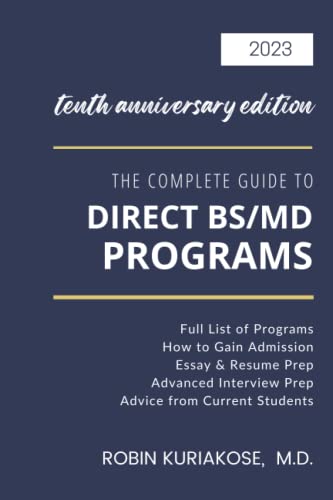 |
Understanding Direct BS/MD Programs | Explains combined program structures | Covers academic prerequisites | Detailed preparation advice | View on Amazon | Read Review |
| Holistic Career Roadmap |  |
Ultimate Guide to BSMD Programs | Long term career planning | Balanced academic advice | Holistic student perspective | View on Amazon | Read Review |
| Essential Admissions Manual |  |
BS/MD Complete Enrollment Handbook | Logical organization | Clear testing timelines | Accessible terminology | View on Amazon | Read Review |
| Focused Skill Builder |  |
BS/MD Application Success Guide | Strong focus on essays | Narrative development tips | Admissions criteria explained | View on Amazon | Read Review |
| Reliable Planning Tool |  |
BS/MD Program Entry Guide | Easy to organize tasks | Clear eligibility summaries | Solid foundational advice | View on Amazon | Read Review |
| Direct Admissions Resource |  |
BS/MD Getting Into Medical School | Direct and concise | Identifies common mistakes | High yield information | View on Amazon | Read Review |
| Tactical Application Prep | 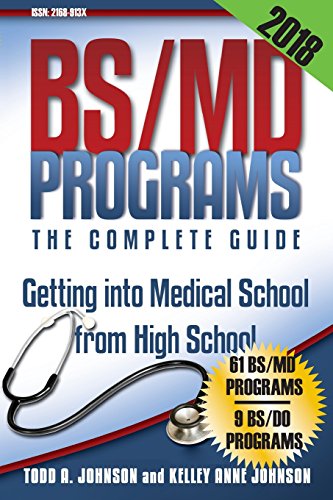 |
BS/MD Admissions Strategy Guide | Strategic profile positioning | Efficient program research | Tactical application advice | View on Amazon | Read Review |
| Comprehensive Preparation Manual |  |
Combined BS/MD Program Guide | Deep curriculum analysis | Balanced workload advice | Comprehensive scope | View on Amazon | Read Review |
More Details on Our Top Picks
-
BS/MD Programs Comprehensive Guide
If you are aiming for a direct path to medical school, this guide acts as a roadmap for the entire application journey. It is perfect for high school students who want to understand the admissions landscape before starting their senior year.
The book provides a clear breakdown of how to prepare for competitive combined degrees. Just keep in mind that since these programs are extremely selective, the advice requires significant time to implement effectively.
- Program Focus:BS/MD Admissions
- Target Audience:High School Students
- Content Depth:Highly Detailed
- Additional Feature:Step by step application breakdown
- Additional Feature:Strategic interview preparation advice
- Additional Feature:Timeline for standardized testing
-
Getting into Medical School Guide
Think of this book as a focused manual for anyone feeling overwhelmed by the complexity of dual degree applications. It excels at simplifying the application process into manageable steps for families.
You will find the advice on building a competitive profile particularly useful. However, the text focuses heavily on the process and leaves less room for individual introspection about why you want to be a doctor.
- Target Audience:High School Students
- Format:Comprehensive Guide
- Content Depth:Practical and Direct
- Additional Feature:Essay writing strategies
- Additional Feature:Admissions committee insights
- Additional Feature:Application checklist included
-
Understanding Direct BS/MD Programs
This guide is an excellent choice for students who need to understand the core structure of combined programs. It helps you grasp the difference between various academic pathways before you commit your time to an application.
The depth of information regarding pre-professional requirements is a strong point. You might find the technical language a bit dense if you are just beginning to explore your options.
- Program Focus:Direct BS/MD
- Author Expertise:Admissions Professional
- Content Depth:Academic Focus
- Additional Feature:Program comparison tables
- Additional Feature:Course requirement analysis
- Additional Feature:Career path mapping
-
Ultimate Guide to BSMD Programs
This volume treats the transition from high school to medical school as a long term project. It is ideal for the student who wants to see the big picture of their future career in healthcare.
You will appreciate the emphasis on maintaining a strong academic record while managing extracurriculars. Because it covers so much ground, the focus on specific school selection is somewhat generalized.
- Program Focus:BSMD Integrated Programs
- Target Audience:High School Students
- Content Depth:Comprehensive
- Additional Feature:Extracurricular planning tips
- Additional Feature:Balancing academic stress
- Additional Feature:Long term professional goal setting
-
BS/MD Complete Enrollment Handbook
When you need a reliable reference for the administrative side of applications, this book is a solid choice. It breaks down the entry requirements into logical categories that are easy to digest.
The inclusion of standardized testing timelines is particularly helpful for busy students. Be aware that the content assumes you have already researched which schools offer these specific programs.
- Target Audience:Prospective Medical Students
- Format:Handbook
- Content Depth:Process Oriented
- Additional Feature:Application cycle calendar
- Additional Feature:Requirement sorting guides
- Additional Feature:Testing preparation tips
-
BS/MD Application Success Guide
This guide focuses on the specific soft skills required to stand out to an admissions committee. It is designed for students who have the grades but need help with their personal narrative.
The author provides helpful prompts for refining your personal statement. The limitation here is that it focuses more on the written application than on the specific academic prerequisites of individual colleges.
- Target Audience:High School Applicants
- Author Expertise:Admissions Counselor
- Content Depth:Narrative Focus
- Additional Feature:Essay writing templates
- Additional Feature:Interview preparation advice
- Additional Feature:Soft skill development
-
BS/MD Program Entry Guide
Consider this your primary resource if you are just starting to map out your college list. It provides a clear view of the eligibility criteria that most top-tier programs require.
The structured approach makes it easier to keep your application tasks organized throughout the year. It does not go into deep detail on financial aid, so you will need to supplement that research elsewhere.
- Target Audience:High School Students
- Format:Planning Guide
- Content Depth:Procedural
- Additional Feature:Application organization charts
- Additional Feature:Eligibility checklist
- Additional Feature:Yearly planning calendar
-
BS/MD Getting Into Medical School
If you value straightforward advice over fluff, this guide fits the bill perfectly. It highlights the critical components of a successful application in a very direct manner.
It is particularly strong on identifying common pitfalls during the application cycle. The writing style is utilitarian, which some students prefer, though it lacks the warmth of a coaching style guide.
- Target Audience:College Bound Students
- Format:Concise Guide
- Content Depth:Practical
- Additional Feature:Common application errors
- Additional Feature:Pitfall avoidance strategies
- Additional Feature:Admissions insight list
-
BS/MD Admissions Strategy Guide
This book serves as a tactical guide for students who are ready to start filling out forms. It offers specific advice on how to position your profile to match what schools are looking for.
You will find the advice on program research to be highly efficient. Because it is so tactical, it moves quickly through the basics, so ensure you have a baseline understanding before reading.
- Target Audience:High School Students
- Author Expertise:Admissions Specialist
- Content Depth:Tactical
- Additional Feature:Profile building exercises
- Additional Feature:Research methodology tips
- Additional Feature:Application filing procedures
-
Combined BS/MD Program Guide
This resource is built for the student who wants to understand the full academic transition from high school to a medical degree. It offers a deep dive into the curriculum structure of combined programs.
The author does a great job of explaining how to balance your workload during the undergraduate portion of the program. It is a long read, so plan to digest it in smaller chunks.
- Program Focus:Combined Degrees
- Author Expertise:Academic Advisor
- Content Depth:Extensive
- Additional Feature:Curriculum mapping tools
- Additional Feature:Undergraduate balance tips
- Additional Feature:Long term academic success guide
Frequently Asked Questions
Are these programs really faster than the traditional route?
Yes, they typically condense the standard eight-year process into six or seven years. By removing the traditional gap year and streamlining general education requirements, you enter the medical workforce sooner.
What happens if I fail to maintain the required GPA?
Most programs have a probationary period, but failing to meet the academic standards often results in dismissal from the program. You would then need to apply to medical school through the standard AMCAS process like everyone else.
Can I switch my major while in an accelerated program?
Most programs require you to stick to a science-heavy curriculum to ensure you meet all medical school prerequisites. Switching majors often complicates your ability to finish on time, so verify the flexibility of your degree path before you enroll.
Do these programs provide financial aid for both degrees?
Financial aid packages vary, but many schools allow you to carry your undergraduate scholarship through the duration of the program. Be sure to clarify if your aid remains constant when you transition from the undergraduate tuition rate to the medical school rate.
Will I be at a disadvantage for residency matching?
There is no evidence that graduating from an accelerated program hurts your residency matching chances. In fact, your consistent performance over a compressed timeline can demonstrate strong time management skills to program directors.