
How do you know if you are chasing a ghost or a genuine system failure? A refrigerant leak is like a slow leak in a tire, frustratingly hard to pinpoint until the system stops cold.
Finding the Best Hvac Leak Detectors requires balancing sensitivity against the specific type of gas you encounter. Some tools act like bloodhounds for minute traces, while others offer a wider net for standard residential work. Grab your gear and keep reading to see what fits your toolkit.
Key Takeaways
- Prioritize sensors with long lifespans to avoid frequent, costly replacements.
- Choose between infrared and heated diode sensors based on the specific refrigerants you service most often.
- Ensure the device features a clear, backlit display so you can read results in dark or confined mechanical rooms.
- Verify the device detects modern A2L refrigerants if you work on newer, high-efficiency equipment.
- Carry a backup liquid bubble solution for quick, final verification once a sensor gives you an initial alarm.
| The Industry Gold Standard |  |
Bacharach H-10 Pro Refrigerant Leak Detector | Extremely high sensitivity levels | Proven, reliable sensor tech | Visual and audible alarms | View on Amazon | Read Review |
| Long Lasting Infrared | 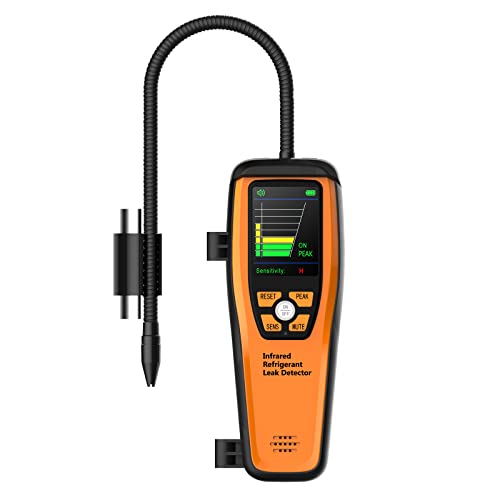 |
Elitech ILD-200 Infrared Leak Detector | Ten year sensor lifespan | Easy to use interface | Clear visual leak indication | View on Amazon | Read Review |
| Precise Field Performer |  |
Fieldpiece DR58 Heated Diode Detector | Excellent sensitivity range | Very easy to read | Compact and lightweight | View on Amazon | Read Review |
| Consistent Infrared Sniffer |  |
Fieldpiece DR82 Infrared Leak Detector | Ignores oil and moisture | Long sensor life | Intuitive menu system | View on Amazon | Read Review |
| Versatile Diode Option |  |
Elitech ILD-100H Heated Diode Detector | Detects wide refrigerant range | Very fast warm up | Simple operation | View on Amazon | Read Review |
| Budget Friendly Essential |  |
Elitech CLD-100 Halogen Leak Detector | Very affordable entry point | Simple to operate | Lightweight design | View on Amazon | Read Review |
| Reliable Industry Staple | 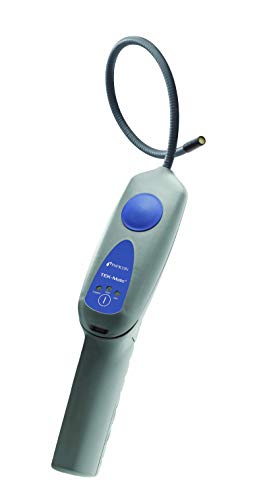 |
Inficon 705-202-G1 Refrigerant Detector | Proven build quality | Consistent detection performance | Easy to maneuver | View on Amazon | Read Review |
| Simple Portable Sniffer |  |
Elitech WJL-6000S Freon Detector | Very easy to carry | Quick start time | Simple sensitivity control | View on Amazon | Read Review |
| Comprehensive Safety Tool | 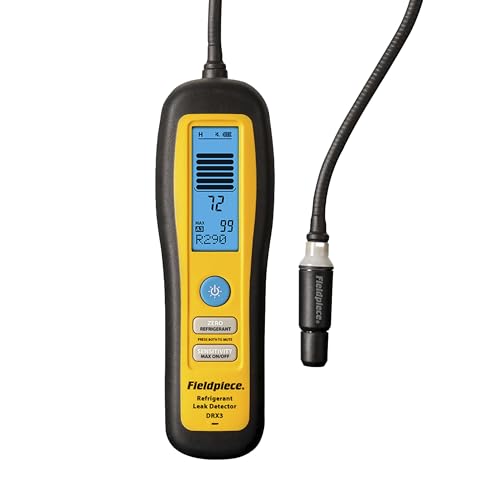 |
Fieldpiece DRX3 Multi-Gas Detector | Detects flammable refrigerants | Dual gas capability | Very high sensitivity | View on Amazon | Read Review |
| Classic Liquid Solution |  |
RectorSeal Better Bubble Detector | Zero chance of false alarms | Works in all temperatures | Fast acting formula | View on Amazon | Read Review |
More Details on Our Top Picks
-
Bacharach H-10 Pro Refrigerant Leak Detector
If you ask veteran technicians what they keep in their truck for the toughest leaks, they will almost certainly mention this unit. It functions like a bloodhound for refrigerants, using a specialized heated sensor that responds quickly even when background gas levels are high.
It is ideal for high-stakes repairs where missing a tiny pinhole could mean a callback. Just keep in mind that the wired design might feel a bit tethered compared to the modern wireless units flooding the market today.
- Brand:Bacharach
- Detector Type:Heated Diode
- Additional Feature:Dual power source flexibility
- Additional Feature:Internal sensor self-test
- Additional Feature:Rugged protective carrying case
-
Elitech ILD-200 Infrared Leak Detector
This tool is built for professionals who want to avoid the constant maintenance of older sensor technologies. It utilizes an infrared sensor that maintains its accuracy for an impressive ten years, making it a reliable workhorse for your daily service calls.
You will appreciate the adjustable sensitivity settings that allow you to narrow down the source of a leak without chasing false positives. While the infrared tech is great for most jobs, it is slightly less responsive to certain specific gas blends than a heated diode setup.
- Brand:Elitech
- Detector Type:Infrared
- Sensor Life:10 Years
- Additional Feature:Rechargeable lithium battery
- Additional Feature:Peak hold function button
- Additional Feature:Large backlit display
-
Fieldpiece DR58 Heated Diode Detector
When you need to pinpoint a leak in a cramped mechanical room, this device provides the clarity you need. It uses a heated diode sensor to sniff out even the smallest traces of refrigerant with remarkable speed.
The screen is bright enough to read in dim lighting, which is a massive help when you are crawling behind equipment. The only drawback is that the sensor does require occasional replacement to maintain that pinpoint accuracy.
- Brand:Fieldpiece
- Detector Type:Heated Diode
- Additional Feature:Bright backlit LCD screen
- Additional Feature:Rugged rubberized housing
- Additional Feature:Fast warm up time
-
Fieldpiece DR82 Infrared Leak Detector
Infrared technology is often preferred for its stability, and this unit delivers that in a highly portable package. It ignores oil and moisture, which means you spend less time cleaning your workspace and more time finishing the job.
It is a fantastic choice for technicians who work across a wide variety of systems daily. Because it is an infrared sensor, it does not suffer from the same degradation issues as older diode-style sensors, though it lacks the sheer aggressiveness of a heated diode on very small leaks.
- Brand:Fieldpiece
- Detector Type:Infrared
- Additional Feature:Numerical leak size indicator
- Additional Feature:Durable carrying case
- Additional Feature:Long battery runtime
-
Elitech ILD-100H Heated Diode Detector
This model is a strong contender if you prefer the fast response of a heated diode sensor. It is designed to detect a wide spectrum of refrigerants, making it a flexible addition to any HVAC toolkit.
The unit is quite sensitive, allowing you to track down leaks in systems that are heavily loaded with refrigerant. You should note that because it is a heated diode, the sensor will eventually need to be swapped out as it ages.
- Brand:Elitech
- Detector Type:Heated Diode
- Additional Feature:Adjustable sensitivity levels
- Additional Feature:Visible alarm indicators
- Additional Feature:Compact handheld shape
-
Elitech CLD-100 Halogen Leak Detector
If you are just starting your career or need a reliable backup tool, this unit offers basic functionality at a sensible price. It is straightforward to operate and does exactly what you need it to do when hunting for halogen-based refrigerants.
It is light and fits easily into a tool bag, which makes it great for quick inspections. Keep in mind that it lacks the advanced digital displays found on premium models, so you will rely mostly on audible beeps to find your leak.
- Brand:Elitech
- Detector Type:Corona Discharge
- Additional Feature:Adjustable sensitivity dial
- Additional Feature:Audible alarm signal
- Additional Feature:Flexible probe tip
-
Inficon 705-202-G1 Refrigerant Detector
Inficon is known for making tools that last, and this unit is no exception. It is a solid, dependable choice for those who want a device that works every time they pull it out of the bag.
The detection speed is consistent, helping you move through your inspection checklist without unnecessary delays. It is a bit more utilitarian in its design, focusing entirely on performance rather than fancy screen features.
- Brand:Inficon
- Detector Type:Heated Diode
- Additional Feature:Durable sensor housing
- Additional Feature:Clear alert system
- Additional Feature:Long reach probe
-
Elitech WJL-6000S Freon Detector
This is a no-frills, highly portable device that is perfect for automotive HVAC work or light residential maintenance. It turns on quickly and lets you get to work without navigating complex software menus.
The sensitivity adjustment is manual, giving you total control over how the device reacts to the gas concentration. It is a basic tool that does not have the sophisticated filtering of high-end sensors, so use it carefully in areas with high air circulation.
- Brand:Elitech
- Detector Type:Corona Discharge
- Additional Feature:Visual LED indicators
- Additional Feature:Audible alarm frequency change
- Additional Feature:Battery powered portability
-
Fieldpiece DRX3 Multi-Gas Detector
This is an excellent option if you work on modern systems that use a wide variety of refrigerants, including the flammable A2L and A3 types. It serves as a dual-purpose device, effectively identifying both refrigerant and combustible gas leaks.
It is a smart investment for safety-conscious professionals who want to ensure they are covering all their bases during a complex installation. Because it is built to handle such a wide array of gases, it may be more than what you need if you strictly service standard residential R410A units.
- Brand:Fieldpiece
- Detector Type:Heated Diode
- Additional Feature:Integrated gas type selection
- Additional Feature:Rugged housing
- Additional Feature:Bright display screen
-
RectorSeal Better Bubble Detector
Sometimes the most effective tool is a simple liquid that highlights a leak visually. This bottle is a must-have for quick checks on fittings and valves where you suspect a leak but do not want to pull out a powered electronic device.
It is effective across a wide temperature range, making it useful in almost any environment you might face. Just remember that it requires a manual application, so it is best used for pinpointing leaks after you have identified the general area with a sniffer.
- Brand:RectorSeal
- Detector Type:Bubble Solution
- Additional Feature:Non-corrosive ingredients
- Additional Feature:Long lasting foam
- Additional Feature:Easy applicator nozzle
Frequently Asked Questions
Do I need a different detector for R-410A versus older refrigerants?
Most modern electronic leak detectors are designed to be refrigerant-agnostic. They detect halogens, which are common to almost all standard HVAC refrigerants. Always verify the product manual to ensure it supports the specific gas types you work with most often. Most reputable brands will explicitly list compatibility with common blends like R-134a, R-404A, and R-410A.
How often should I calibrate my leak detector?
You should check your device against a known reference leak source before every major job. This ensures your sensor accuracy hasn't drifted since the last time you used it. If your device features a self-calibration mode, run it at the start of your shift. Keeping the sensor clean and free of oil or dirt will also help maintain calibration for a longer period.
Why does my detector go off in every corner of the room?
This usually happens because you are working in a space with poor ventilation where refrigerant gas has pooled. If the air is saturated, the sensor cannot distinguish the leak source from the background concentration. Try to increase airflow in the area by using a fan or opening windows before you begin. Once the room is clear, you will have a much easier time tracing the gas trail back to the actual puncture.
What is the benefit of a pump-style detector?
A unit with an internal pump actively draws air into the sensor, which is much faster than waiting for gas to diffuse naturally. This active sampling allows you to reach into tight, cramped spaces where you cannot easily fit the tip of the probe. These units are highly effective for locating leaks in hidden coils or deep within appliance cabinets. Just remember that the pump adds a layer of complexity and requires extra battery power.
Can I use these detectors to find gas leaks in my furnace?
Most HVAC leak detectors are built specifically for refrigerant gases and will not trigger for natural gas or propane. You need a dedicated combustible gas detector to safely monitor fuel lines for furnaces. Using a refrigerant detector for fuel lines is dangerous and ineffective. Always keep a specialized meter on hand if you plan to perform maintenance on both heating and cooling systems.